
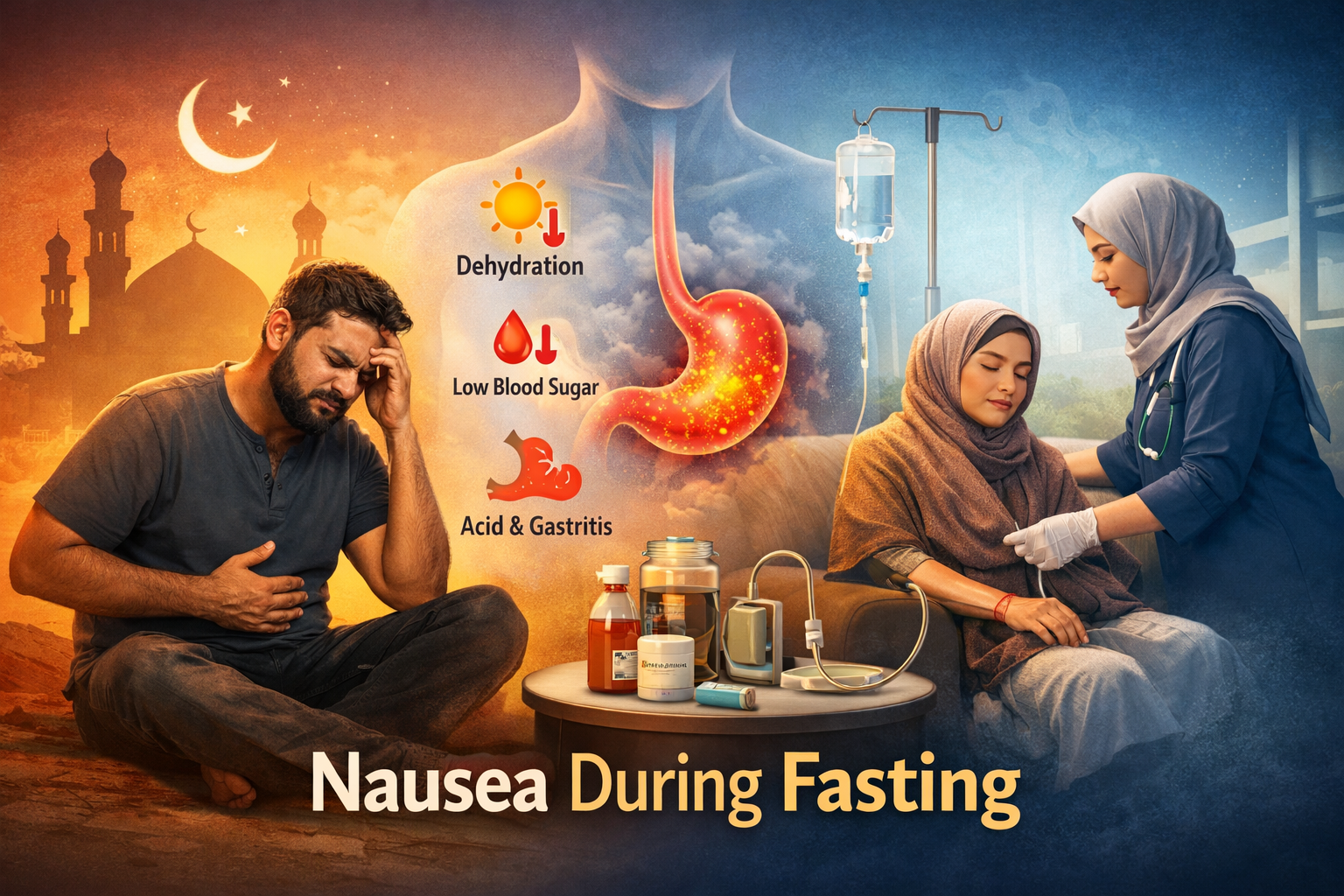
Ramadan fasting brings meaningful spiritual benefits, yet it also introduces physiological changes that can affect digestion, hydration, and metabolic balance. One of the most common complaints during the fasting month is nausea, sometimes accompanied by vomiting. While these symptoms are often mild and temporary, they can occasionally indicate dehydration, gastric irritation, or underlying medical concerns that require attention.
In some cases, individuals experiencing persistent vomiting or significant fluid loss may require medical evaluation and supportive care, such as a hydration IV drip through a professional IV drip home service. Understanding the causes, warning signs, and appropriate recovery strategies is essential for maintaining health throughout Ramadan.
Why Nausea Occurs During Fasting
Nausea during fasting typically results from physiological adjustments in the body. The absence of food and fluids for extended hours alters stomach acid production, blood glucose levels, and hydration status.
Dehydration
Dehydration is one of the leading causes of nausea during fasting, particularly in warmer climates such as the UAE. When fluid intake between iftar and suhoor is insufficient, the body struggles to maintain electrolyte balance. Symptoms may include dizziness, dry mouth, headache, fatigue, and nausea. Vomiting may occur in moderate to severe cases of dehydration.
Individuals who consume excessive caffeine at suhoor or insufficient water overnight are at higher risk.
Gastritis and Excess Stomach Acid
Fasting can increase gastric acid exposure in individuals prone to gastritis or acid reflux. An empty stomach does not necessarily stop acid production. Instead, acid may irritate the stomach lining, leading to burning pain, nausea, or even vomiting.
Spicy, fried, or acidic foods at iftar can worsen irritation. Those with known peptic ulcer disease or chronic gastritis may experience more pronounced symptoms.
Low Blood Sugar (Hypoglycemia)
Blood glucose levels naturally decline during prolonged fasting. In healthy individuals, this is usually well tolerated. However, people with diabetes, metabolic disorders, or poor suhoor intake may develop hypoglycemia.
Symptoms can include nausea, sweating, shaking, weakness, and confusion. Vomiting is less common but may occur if hypoglycemia is significant.
Migraines and Headaches
Fasting-related headaches are common during the first days of Ramadan. Triggers include caffeine withdrawal, dehydration, and changes in sleep patterns. Nausea frequently accompanies migraines and may progress to vomiting in susceptible individuals.
Medication Timing
Certain medications, especially antibiotics, iron supplements, and pain relievers, can cause stomach irritation if taken without adequate food. Adjusting medication schedules during Ramadan without medical guidance can increase the risk of gastrointestinal discomfort.
If intravenous therapy is required for infection management, an antibiotic iv drip administered under professional supervision may be necessary rather than oral medication that worsens nausea.
Viral or Bacterial Infections
Gastroenteritis or foodborne illness can occur during Ramadan due to changes in meal patterns and food preparation practices. Repeated vomiting, abdominal cramps, fever, or diarrhea may indicate infection rather than fasting-related discomfort.
Is Vomiting During Fasting Dangerous?
Occasional mild nausea without persistent vomiting is usually not dangerous. It may resolve with rest, proper hydration at iftar, and dietary adjustments.
However, repeated vomiting can lead to:
- Dehydration
- Electrolyte imbalance
- Weakness and dizziness
- Reduced kidney function in severe cases
Vomiting that continues after breaking the fast or prevents adequate fluid intake should not be ignored.
When Should You See a Doctor?
Medical evaluation is recommended if any of the following occur:
- Persistent vomiting lasting more than 24 hours
- Inability to keep fluids down
- Signs of severe dehydration (very dark urine, minimal urination, confusion, rapid heartbeat)
- Blood in vomit
- Severe abdominal pain
- High fever
- Symptoms in elderly individuals, pregnant women, or those with chronic illness
In Dubai and across the UAE, access to a doctor-on-call service can provide timely assessment at home. For patients who are unable to travel due to weakness, home-based medical support may help prevent complications.
Preventing Nausea at Suhoor
Suhoor plays a critical role in preventing daytime nausea. A balanced pre-dawn meal stabilizes blood sugar and supports hydration.
Choose Complex Carbohydrates
Whole grains such as oats, brown bread, or quinoa release energy slowly and reduce the risk of hypoglycemia.
Include Protein
Eggs, yogurt, nuts, and legumes help prolong satiety and maintain metabolic stability.
Avoid Heavy, Greasy Foods
Fried and high-fat meals delay stomach emptying and increase the risk of acidity and nausea later in the day.
Limit Caffeine
Caffeine increases urine output and contributes to dehydration. Gradual reduction before Ramadan may reduce withdrawal headaches.
Hydrate Gradually
Consuming water steadily between iftar and suhoor is more effective than drinking large amounts at once.
Smart Iftar Practices to Reduce Risk
Breaking the fast appropriately minimizes gastrointestinal distress.
- Start with small portions, such as dates and water.
- Avoid overeating immediately. Rapid consumption can overwhelm the digestive system.
- Limit spicy, fried, and acidic foods if prone to gastritis.
- Eat slowly and chew thoroughly.
Overeating at iftar is a common cause of post-meal nausea and vomiting.
Hydration Strategies for Recovery
If vomiting has already occurred, the priority is restoring fluids safely.
Oral Rehydration
Small, frequent sips of water or oral rehydration solutions are preferred over large volumes at once. Coconut water and clear broths may help replenish electrolytes.
Rest and Gradual Diet Reintroduction
Begin with bland foods such as rice, toast, bananas, or yoghurt. Avoid rich meals until symptoms fully resolve.
Intravenous Hydration
In moderate to severe dehydration, oral intake may not be sufficient. A hydration iv drip delivers fluids and electrolytes directly into the bloodstream, offering faster correction.
In Dubai, some patients opt for IV Drip Home Service Dubai to receive supervised rehydration without visiting a clinic. While convenient, intravenous therapy should only be administered after medical evaluation to ensure appropriateness and safety.
Special Considerations for High-Risk Individuals
Certain groups require extra caution:
- People with diabetes
- Individuals with chronic kidney disease
- Pregnant women
- Elderly individuals
- Patients on multiple medications
For these populations, vomiting can quickly lead to complications. Professional medical advice before and during Ramadan is strongly recommended.
Medication Management During Ramadan
Adjusting medication timing requires careful planning. Some medicines should not be taken on an empty stomach. Others may require dosage adjustments.
Patients receiving treatment for infections, severe dehydration, or nutrient deficiencies may require intravenous options. In select cases, an antibiotic iv drip administered under medical supervision ensures adequate treatment without worsening gastric symptoms.
Home-based healthcare providers in the UAE may offer IV Drip at home Dubai services, but this should always be guided by clinical assessment rather than self-referral alone.
Recovery After Breaking the Fast
If vomiting occurs during fasting hours, Islamic guidelines permit breaking the fast if health is at risk. From a medical perspective, preventing dehydration and electrolyte imbalance is essential.
Recovery steps include:
- Rehydrating gradually
- Monitoring urine output
- Avoiding strenuous activity
- Seeking medical advice if symptoms persist
Resuming fasting should only occur once full recovery is achieved.
Conclusion
Nausea and vomiting during Ramadan are common but often manageable when the underlying cause is identified. Dehydration, acidity, hypoglycemia, medication timing, and infections are among the most frequent contributors. Mild symptoms typically improve with dietary adjustments and proper hydration between iftar and suhoor.
However, persistent vomiting, signs of severe dehydration, or symptoms in high-risk individuals require medical evaluation. Access to a doctor on call and professional iv drip home service can provide safe support when oral hydration is insufficient. In Dubai, medically supervised iv drip at home dubai options are increasingly utilized for controlled rehydration and recovery during Ramadan.
Fastcare provides iv drip home service dubai solutions for patients who require medically supervised hydration and recovery support during the fasting month, ensuring safe and timely care when needed.