
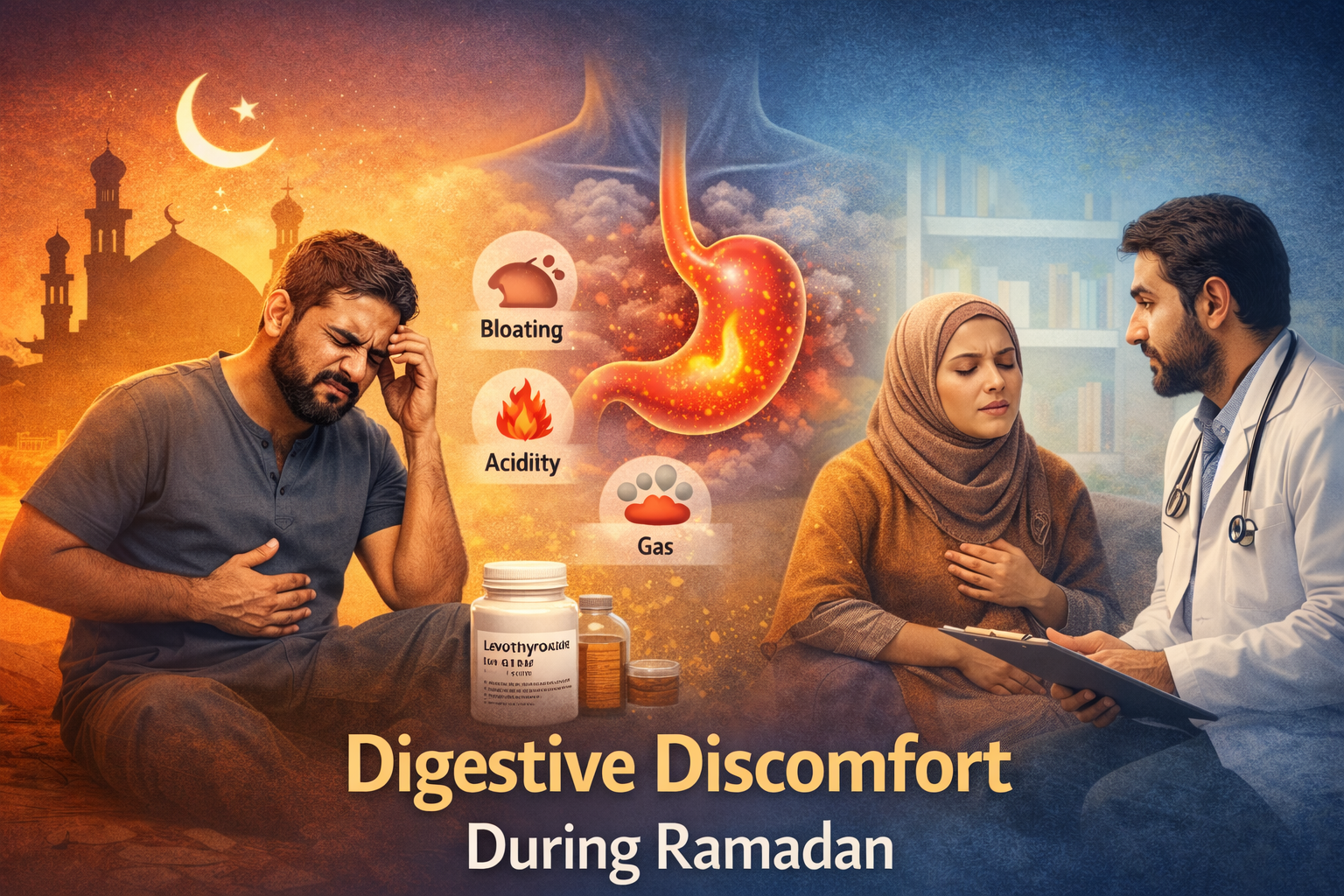
Digestive discomfort is one of the most common health concerns during Ramadan. Extended fasting hours, followed by large evening meals, can strain the gastrointestinal system and lead to bloating, acidity, gas, and abdominal discomfort. While these symptoms are often temporary, repeated episodes may affect overall well-being and interfere with daily activities. In some cases, a professional evaluation through a doctor on call may be necessary to rule out underlying conditions such as gastritis or acid reflux disease.
Understanding why digestive issues occur during fasting and selecting appropriate foods at suhoor and iftar can significantly reduce symptoms.
Why Digestive Problems Increase During Ramadan
The digestive system adapts to a prolonged fasting period by slowing gastric emptying and altering acid production. When food is suddenly reintroduced at iftar, especially in large quantities, the stomach may struggle to accommodate the rapid intake.
Several physiological factors contribute to discomfort:
- Increased gastric acid exposure during long fasting hours
- Overeating after sunset
- High consumption of fried and spicy food
- Reduced hydration
- Changes in sleep patterns
These changes can trigger bloating, heartburn, and abdominal heaviness.
Common Symptoms
Digestive complaints during Ramadan typically include:
- Abdominal bloating
- Excessive gas
- Burning sensation in the chest (acid reflux)
- Nausea
- Indigestion
- Early satiety
While mild symptoms are common, persistent or severe discomfort should not be ignored. Access to a home doctor on call service can provide timely evaluation, particularly for individuals with pre-existing gastrointestinal conditions.
Foods That Help Prevent Bloating
Dietary choices play a central role in minimizing digestive distress.
Start with Light, Easily Digestible Foods
Breaking the fast with dates and water remains beneficial. Dates provide natural sugars for gradual energy restoration, while water helps rehydrate the digestive tract. Clear soups and broths gently stimulate digestion without overwhelming the stomach.
Include Probiotic-Rich Foods
Yogurt and laban contain beneficial bacteria that support gut health and reduce gas formation. Consuming probiotic-rich foods at suhoor may improve digestion throughout the fasting day.
Choose Complex Carbohydrates
Whole grains such as brown rice, oats, and whole wheat bread digest more slowly and promote stable blood sugar levels. These foods reduce the likelihood of rapid fermentation that contributes to bloating.
Opt for Lean Proteins
Grilled chicken, fish, eggs, and legumes provide necessary nutrients without excessive fat. High-fat meals delay gastric emptying and increase the risk of acid reflux.
Add Fiber Gradually
Vegetables such as cucumbers, spinach, zucchini, and carrots support bowel regularity. However, excessive fiber intake in one meal may worsen bloating. Gradual inclusion is advisable.
Foods That Reduce Acidity
Acid reflux and heartburn frequently occur after heavy iftar meals. Certain dietary adjustments can help prevent these symptoms.
Alkaline and Low-Acid Foods
Bananas, melons, oatmeal, and boiled potatoes are less likely to trigger acid production. These foods can soothe the stomach lining.
Avoid Trigger Foods
Spicy dishes, fried foods, citrus fruits, tomato-based sauces, and carbonated beverages increase acid secretion. Limiting these items is particularly important for individuals prone to reflux.
Eat Smaller Portions
Dividing iftar into two smaller meals spaced over several hours reduces pressure on the stomach and lowers reflux risk.
Hydration and Digestive Health
Adequate hydration between iftar and suhoor is essential. Water supports digestion, prevents constipation, and reduces acid concentration. Rapid consumption of large volumes at once, however, may cause discomfort. Spacing fluid intake evenly throughout the evening is preferable.
In cases of severe dehydration accompanied by vomiting or persistent weakness, medical assessment is required. Supervised hydration through an iv drip at home may be recommended when oral intake is insufficient. Intravenous therapy should only be administered under professional medical guidance to ensure safety.
The Role of Suhoor in Preventing Digestive Issues
Suhoor is not only important for sustaining energy but also for stabilizing digestion during fasting hours.
Recommended suhoor choices include:
- Oats with yogurt and seeds
- Boiled eggs with whole grain bread
- Smoothies made with banana and milk
- Hydrating fruits such as watermelon
Caffeine intake should be limited, as it may increase gastric acidity and contribute to dehydration.
When to Seek Medical Attention
While occasional bloating or mild acidity is common, certain symptoms require medical evaluation:
- Persistent or severe abdominal pain
- Difficulty swallowing
- Recurrent vomiting
- Blood in vomit or stool
- Unexplained weight loss
- Severe chest pain
Individuals with known peptic ulcer disease, chronic gastritis, or gastroesophageal reflux disease (GERD) should consult a healthcare provider before fasting.
Access to a doctor on call allows prompt assessment without unnecessary delay. For patients experiencing nighttime discomfort after iftar, a home doctor on call service offers convenient and timely support.
Preventive Strategies for a Comfortable Ramadan
Maintaining digestive health during Ramadan involves practical, consistent habits:
- Break the fast gradually
- Chew food thoroughly
- Avoid lying down immediately after eating
- Engage in light physical activity, such as walking, after iftar
- Maintain consistent sleep patterns
Planning balanced meals and avoiding excess intake significantly reduces gastrointestinal stress.
Special Considerations for High-Risk Individuals
Elderly individuals, pregnant women, and patients with chronic medical conditions require additional caution. Digestive disturbances in these groups may lead to dehydration and metabolic imbalance more rapidly.
If symptoms persist despite dietary adjustments, professional evaluation is advisable. Early intervention prevents complications and supports safe fasting.
Conclusion
Digestive issues during Ramadan are common but largely preventable with mindful dietary choices and structured meal planning. Light, balanced meals at iftar, proper hydration, probiotic-rich foods, and avoidance of trigger items can significantly reduce bloating and acidity.
However, persistent or severe symptoms should not be overlooked. Access to a doctor on call or home doctor on call service ensures timely medical guidance when needed. In cases of significant dehydration or inability to tolerate oral fluids, supervised iv drip at home support may be appropriate under professional care.
Prioritizing digestive health during Ramadan promotes comfort, safety, and overall well-being throughout the fasting month.