
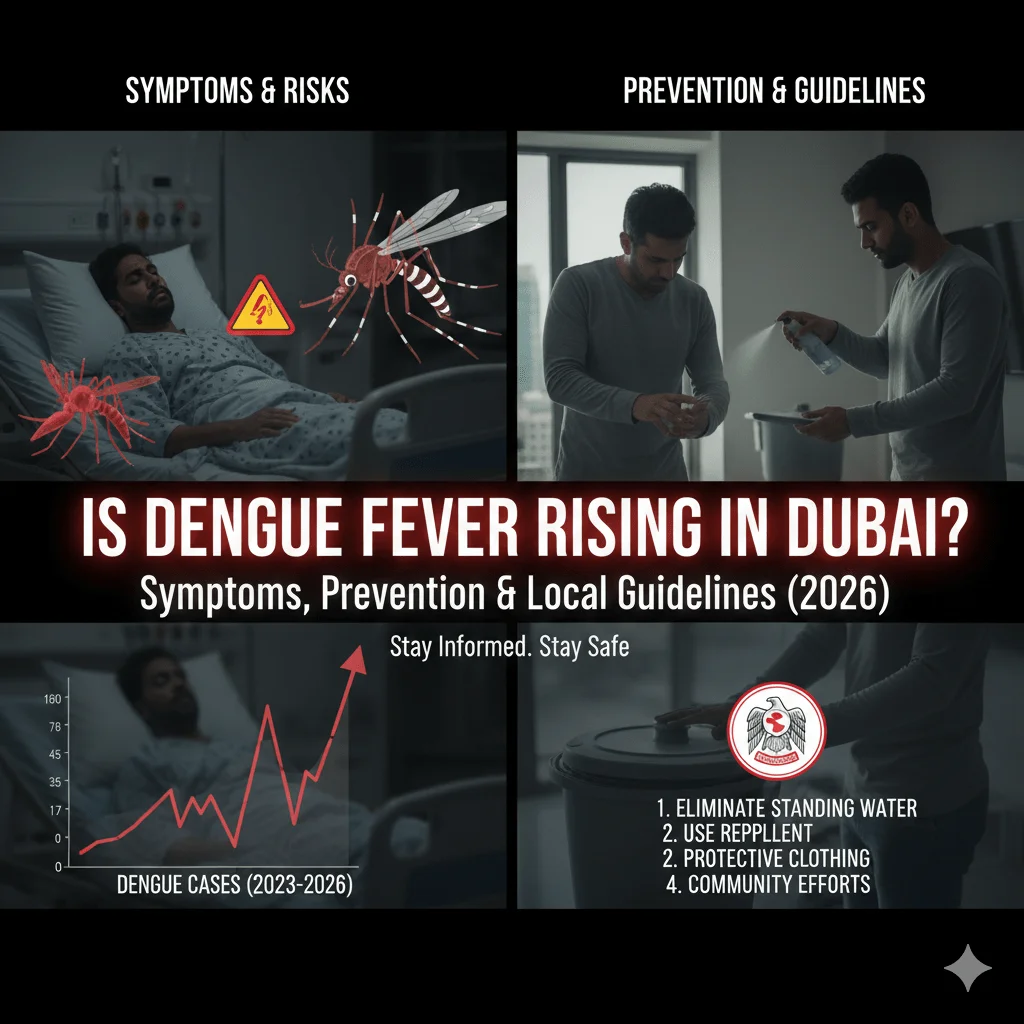
Even though the UAE Government has taken different measures to control and prevent mosquitoes in UAE, still there is an increase in the reporting of Dengue fever cases especially during rainfall. Whether you are living in a high-rise in Dubai Marina or a villa in Arabian Ranches, the recent buzz isn’t just about the city’s latest mega-project, it’s about mosquitoes. Following the historic heavy rains and resulting standing water, Dubai has seen an uncharacteristic rise in Dengue fever cases.
For many international expats used to the sterile, dry heat of the UAE, this is a confusing and concerning shift. Is it safe to sit on your balcony? What happens if you get a fever?
Here is what we will cover:
- The specific symptoms that distinguish Dengue from the flu.
- Why the “Aedes” mosquito loves your AC drip tray.
- How to navigate the local healthcare system (DHA) if you get sick.
- The status of the Dengue vaccine in the UAE.
Key Terms & Definitions
- Aedes Aegypti: The “Tiger Mosquito.” This is the specific type of mosquito that carries Dengue. You can spot it by the black and white stripes on its legs. It is a “day-biter,” meaning it is most active during sunrise and sunset, not just at night.
- Platelet Count: A measure of the cells in your blood that help clotting. Dengue often causes these to drop dangerously low, which is why doctors monitor this number closely.
- Stagnant Water: Any water that sits still for more than 3 days. This is where mosquitoes lay eggs. In Dubai, this isn’t just puddles; it’s plant saucers, AC trays, and blocked drains.
- DHA: The Dubai Health Authority. They are the government body regulating healthcare and public health guidelines in the Emirate of Dubai.
What is Dengue Fever?
Dengue (pronounced DEN-gee) fever is a viral infection transmitted to humans through the bite of infected mosquitoes. It is often called “breakbone fever” because it causes severe muscle and joint pain. Most people recover within a week, but severe cases can lead to internal bleeding and organ impairment. Crucially, it is not contagious directly from person to person; you cannot catch it from sitting next to someone who has it; you can only get it if an infected mosquito bites you.
How Does Dengue Spread?
The mechanism of transmission is the same whether you are in Brazil, Thailand, or the UAE. It follows a cycle involving humans and mosquitoes.
- The Carrier: A female Aedes mosquito bites a person who is already infected with the Dengue virus.
- Incubation: The virus replicates inside the mosquito for about 8–12 days.
- Transmission: The mosquito bites a healthy person, injecting the virus into their bloodstream.
- Symptoms: After 4–10 days, the newly infected person may start showing symptoms.
Note: A mosquito remains infected for its entire life, which is why eliminating adult mosquitoes is just as important as removing water sources.
The Risks and Prevention of Dengue Fever in Dubai
Symptoms to Watch For
If you have a high fever (40°C/104°F) accompanied by two of the following, seek medical advice:
- Severe headache
- Pain behind the eyes (retro-orbital pain)
- Muscle and joint pains
- Nausea or vomiting
- Rash (appears 2–5 days after fever starts)
Advantages of Early Detection vs. Disadvantages of Delay
| Action (Early Detection) | Risks (Delay/Ignorance) |
| Simple Treatment: Most cases are managed with rest and hydration (Paracetamol/Panadol). | Warning Signs: Severe abdominal pain, persistent vomiting, or bleeding gums indicate “Severe Dengue” (medical emergency). |
| Platelet Monitoring: Doctors can track your blood counts to ensure you aren’t at risk of bleeding. | Wrong Medication: Taking Ibuprofen (Advil/Brufen) or Aspirin can thin your blood and worsen Dengue. |
| DHA Support: Dubai has world-class infectious disease protocols in place for isolation and care. | Dehydration: In Dubai’s heat, the combination of fever and vomiting leads to rapid dehydration. |
(Note: In Dubai, if you suspect Dengue, avoid Aspirin and Ibuprofen entirely. Stick to Paracetamol and visit a clinic or blood test at home for a blood test.)
Key Influencing Factors (Universal)
Mosquitoes need only a bottle cap full of water to breed. Urbanization and climate change (warmer winters, wetter springs) are expanding their habitats globally.
Regional Variations: The Dubai Context
- The “Green” Push: Dubai has increased landscaping and greenery significantly. While beautiful, the irrigation required creates humid micro-climates that mosquitoes love.
- Construction Sites: Stalled or active construction sites often have puddles or water drums that go unnoticed, acting as breeding grounds.
- High-Rise Living: Many residents believe living on the 30th floor keeps them safe. However, mosquitoes can travel up elevators or breed in the stagnant water of balcony plant pots and AC drip trays found in high-rise apartments.
Practical Steps & Best Practices for Residents
1. The “Balcony Sweep” (Weekly Ritual)
If you live in an apartment, check your balcony.
- Empty the saucers under your flower pots.
- Check your AC drain line. If it drips into a bucket, empty it daily.
- Local Tip: If you see mosquitoes in your building’s lobby or hallways, notify your building management or FM (Facility Management) company immediately. They are responsible for pest control in common areas.
2. Personal Protection
- Use repellents containing DEET or Picaridin. Brands like Off! or Pif Paf are widely available in Carrefour, Spinneys, and local pharmacies.
- Wear light-colored, loose clothing. Mosquitoes are attracted to dark colors.
3. Report Stagnant Water
In Dubai, you can report large pools of stagnant water (e.g., in empty sandy lots or construction sites) to the Dubai Municipality.
- Call: 800 900
- App: Dubai 24/7 App
Analyst Quote: “The misconception is that mosquitoes are only a ‘ground floor’ problem. In Dubai’s vertical cities, we are seeing breeding sites on balconies 40 floors up because of over-watered plants and neglected drains.” — Local Environmental Health Specialist.
Future Trends & What’s Next for Vector Control
- Wolbachia Method: Countries are experimenting with releasing mosquitoes infected with Wolbachia bacteria, which prevents them from transmitting Dengue. The UAE is investing heavily in biotech and may explore similar bio-control methods.
- AI-Driven Mapping: Dubai is increasingly using AI and drones to map stagnant water in hard-to-reach areas (like rooftops and large construction zones) to target fumigation efforts precisely.
- Vaccine Rollout (Qdenga): The Qdenga vaccine has recently been approved in the UAE. While currently recommended primarily for those who have had Dengue before or are at high risk, availability is expected to widen in private hospitals throughout 2025.
Vendor Selection Tips for Pest Control
If you have a villa or a large terrace, you may need professional pest control. Do not just hire the cheapest option.
- Municipality Approval: Ensure the company is licensed by the Dubai Municipality. They are required to use chemicals that are safe for residents and pets.
- Methodology: Ask if they do “Larviciding” (killing eggs/larvae in water) or just “Fogging” (killing adults). You need both for long-term results.
- Contract Scope: A one-time spray is rarely enough. Look for a vendor offering a 3-month contract with bi-weekly visits during the cooler, wetter months.
Key Takeaways | Dengue Fever in Dubai
| Aspect | Universal Truth | What to Check Locally (Dubai/UAE) |
| Transmission | Spread by mosquito bites, not person-to-person. | The Aedes mosquito is active during the day (sunrise/sunset). |
| Treatment | No cure; supportive care only. Avoid Ibuprofen. | Visit a DHA-licensed clinic. Check if your insurance covers “infectious diseases.” |
| Reporting | Authorities need to know about breeding sites. | Call 800 900 (Dubai Municipality) to report stagnant water. |
| Prevention | Eliminate standing water. | Check AC drip trays and balcony plant saucers specifically. |
Frequently Asked Questions (FAQ Section)
Is there a vaccine for Dengue Fever available in Dubai?
Yes, the Qdenga vaccine has been approved for use in the UAE. It is generally administered in two doses, three months apart. However, it is currently most recommended for individuals who have had a prior Dengue infection or those traveling to high-risk endemic areas. Consult a doctor at a major hospital (e.g., American Hospital, Mediclinic, or Rashid Hospital) for eligibility.
I have a Dengue fever. Should I go to the ER immediately?
Not necessarily. If you have a mild fever and body aches, you can visit a general practitioner or family clinic first. However, if you experience severe abdominal pain, persistent vomiting, bleeding gums, or extreme fatigue, go to the Emergency Room immediately.
Can mosquitoes breed in my AC?
Mosquitoes cannot breed inside the machine, but they love the drip tray or the bucket where the condensation water collects. In Dubai’s humidity, these fill up quickly. Ensure these are emptied or treated with larvicide tablets.
Is Dengue Fever fatal?
Severe Dengue (Dengue Hemorrhagic Fever) can be fatal if untreated, but with early medical care, the mortality rate is very low (less than 1%). The healthcare infrastructure in Dubai is well-equipped to manage these cases effectively.
Conclusion
While the rise in Dengue fever in Dubai is a serious post-rain consequence, it is manageable with awareness and community effort. The city is not traditionally a Dengue fever zone, which makes vigilance even more important but we often forget to check for risks we aren’t used to.
The crucial next step is to perform a 5-minute inspection of your home today: check your balcony drains, empty your plant saucers, and save the Dubai Municipality number (800 900) in your phone for reporting stagnant water.