
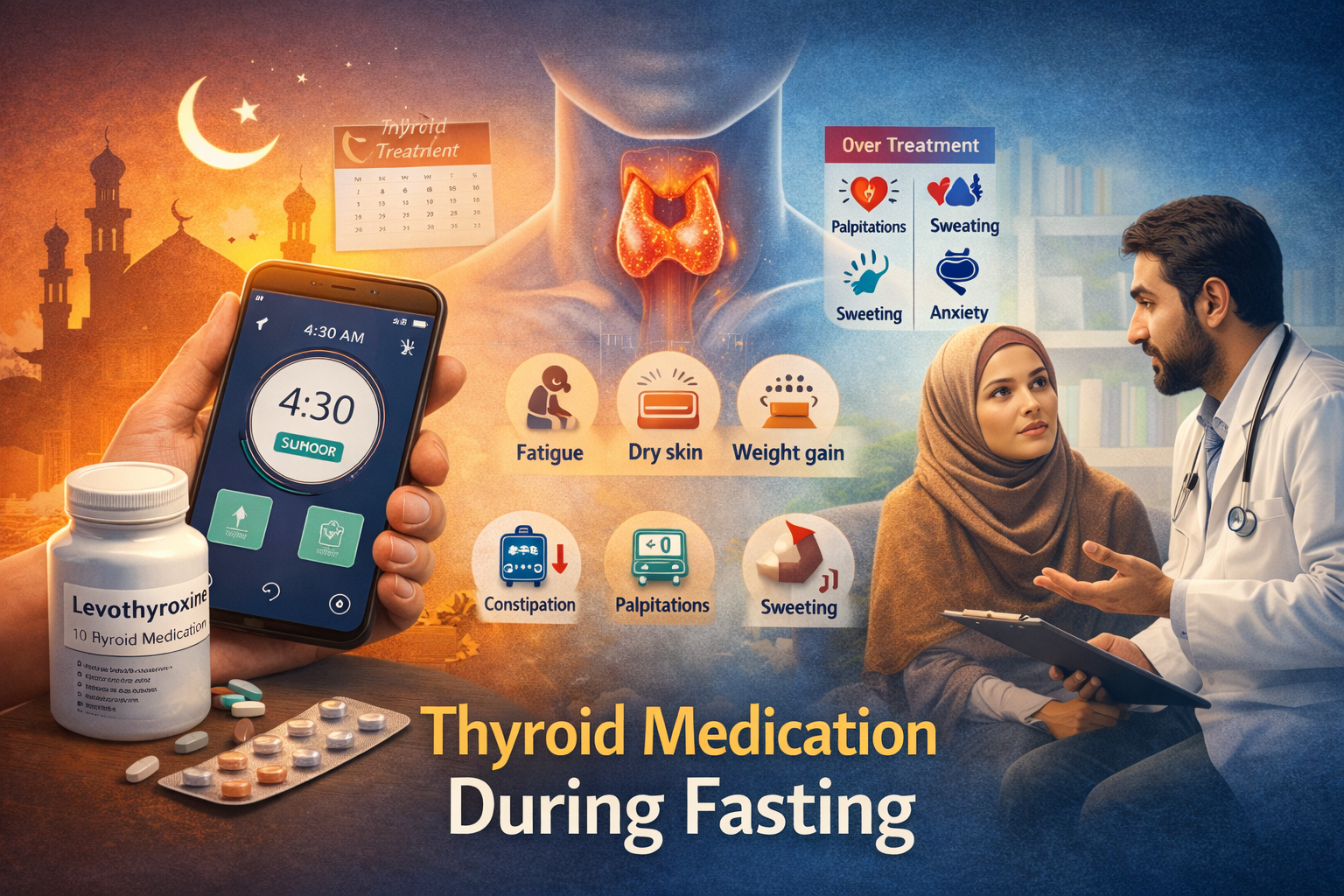
Fasting during Ramadan requires careful planning for individuals managing thyroid disorders. Even if you are diagnosed with hypothyroidism or hyperthyroidism, medication timing and absorption play a critical role in maintaining hormonal balance. Even small deviations in dosing schedules can affect thyroid-stimulating hormone (TSH) levels and symptom control. For this reason, many patients benefit from structured guidance and, when necessary, access to a doctor on call service to ensure safe medication adjustments during fasting.
Thyroid medications, particularly levothyroxine for hypothyroidism, are highly sensitive to timing, food intake, and drug interactions. Ramadan introduces changes in meal schedules that may unintentionally interfere with proper absorption.
How Fasting Affects Thyroid Medication
Levothyroxine is typically taken once daily on an empty stomach, ideally 30 to 60 minutes before breakfast. Its absorption occurs in the small intestine and can be reduced by food, calcium, iron supplements, coffee, and certain medications.
During Ramadan, the standard morning routine changes. Patients who previously took their medication before breakfast must now decide whether to take it before suhoor (pre-dawn meal), after iftar (evening meal), or at another adjusted time. Incorrect timing may reduce absorption and lead to fluctuations in thyroid hormone levels.
Hyperthyroid medications, such as methimazole or carbimazole, may require multiple daily doses. Fasting may complicate evenly spaced dosing schedules, potentially affecting symptom control.
Optimal Timing for Hypothyroidism Medication
For most patients taking levothyroxine, there are two practical options during Ramadan:
Before Suhoor
Taking levothyroxine 30 to 60 minutes before suhoor allows continued fasting while maintaining appropriate absorption. This option requires waking early enough to ensure a sufficient gap between medication intake and food consumption.
Several Hours After Iftar
An alternative is to take the medication at night, at least three to four hours after iftar, once the stomach is empty. This method can be effective for individuals who find early dosing challenging.
Consistency is essential. Switching times frequently during Ramadan may cause unstable hormone levels.
Common Mistakes During Ramadan
Several medication errors occur more frequently during fasting months:
Taking Medication With Food
Some patients take levothyroxine immediately before or after iftar. Food significantly reduces absorption, especially meals rich in fiber, calcium, or soy.
Combining With Supplements
Calcium and iron supplements, commonly taken after meals, interfere with thyroid hormone absorption. A minimum four-hour separation is generally recommended.
Skipping Doses
Fatigue or disrupted sleep may lead to missed doses. Irregular intake can result in rising TSH levels and recurrence of symptoms such as fatigue, weight gain, and cold intolerance.
Adjusting Dose Without Medical Advice
Some individuals independently reduce or alter doses during fasting. Thyroid medication should not be adjusted without medical supervision.
Managing Hyperthyroidism During Fasting
Patients treated for hyperthyroidism require close monitoring, especially if symptoms include palpitations, tremors, or weight loss. Divided dosing schedules may need careful redistribution between iftar and suhoor.
In certain cases, healthcare providers may temporarily modify dosing frequency to accommodate fasting hours. However, these adjustments must be individualised.
Recognizing Warning Signs
Fasting individuals with thyroid disorders should remain alert to symptoms that suggest an imbalance.
Signs of Under-Treatment
- Persistent fatigue
- Constipation
- Dry skin
- Depression
- Weight gain
Signs of Over-Treatment
- Palpitations
- Anxiety
- Insomnia
- Excessive sweating
- Unintentional weight loss
If such symptoms appear, prompt evaluation is necessary. Access to an at home doctor on call can provide a timely assessment without requiring clinic visits during fasting hours.
The Importance of Monitoring
Routine thyroid function tests, including TSH and free T4, help ensure appropriate dosing. Testing is particularly important for:
- Pregnant women
- Elderly individuals
- Patients with cardiac conditions
- Individuals recently diagnosed
- Those who changed medication timing
Arranging a medical check-up at home can facilitate laboratory testing and clinical evaluation during Ramadan. Home-based services provide convenience while ensuring continuity of care.
Hydration and Thyroid Health
Although thyroid medication itself does not directly depend on hydration status, dehydration may worsen fatigue and dizziness, symptoms that can overlap with thyroid imbalance. Maintaining adequate fluid intake between iftar and suhoor supports overall metabolic stability.
Patients experiencing significant weakness, palpitations, or dizziness should seek medical assessment to rule out electrolyte imbalance or cardiovascular strain.
Special Considerations for High-Risk Groups
Certain populations require closer supervision during fasting:
- Pregnant women with hypothyroidism
- Patients with unstable thyroid levels
- Individuals with heart disease
- Elderly patients on multiple medications
For these groups, even minor hormonal shifts can have systemic effects. Regular communication with a healthcare provider is recommended throughout Ramadan.
When to Seek Medical Advice
Patients should consult a healthcare professional if:
- Symptoms significantly worsen
- Doses are repeatedly missed
- New medications are introduced
- Pregnancy occurs
- Palpitations or chest discomfort develop
A doctor on call can evaluate symptoms, review medication schedules, and recommend appropriate testing. Early intervention prevents complications and supports safe fasting.
Safe Fasting Strategies for Thyroid Patients
To maintain stability during Ramadan:
- Take medication at the same time daily
- Maintain the recommended fasting interval before or after meals
- Separate thyroid medication from supplements by at least four hours
- Stay hydrated during non-fasting hours
- Schedule thyroid function testing if symptoms arise
Consistency and medical oversight are the foundations of safe management.
Conclusion
Thyroid medication requires precision in timing and dosing, particularly during Ramadan when daily routines shift. Improper administration may reduce absorption and lead to a hormonal imbalance. Careful planning, symptom monitoring, and professional guidance are essential to maintaining stability throughout the fasting month.
For individuals requiring evaluation or laboratory monitoring, Fastcare provides reliable doctor on call and medical check-up at home services, ensuring safe and convenient access to professional care during Ramadan.