
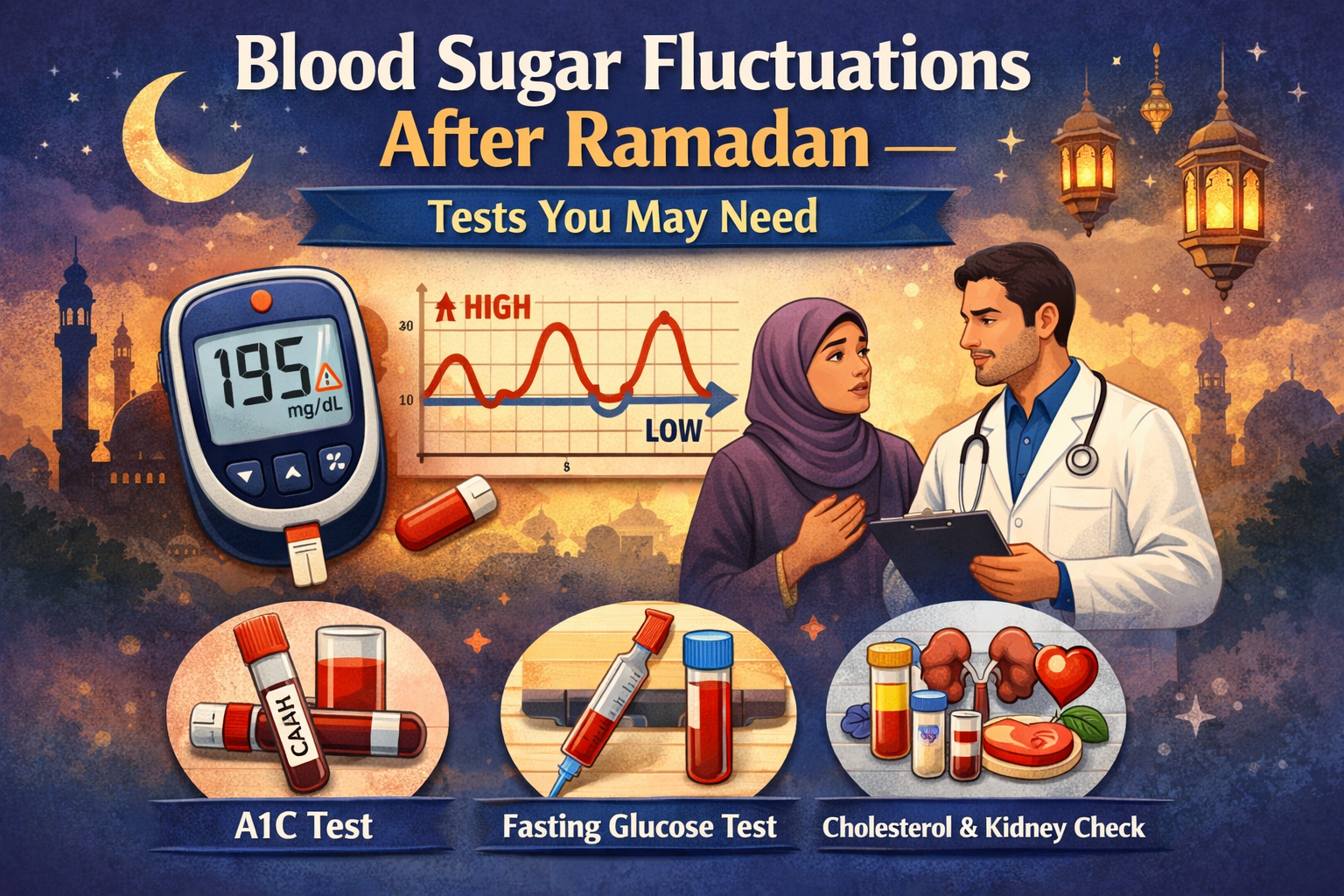
Ramadan introduces significant changes in meal timing, sleep cycles, hydration patterns, and medication schedules. While many individuals experience metabolic benefits during the fasting month, the period immediately after Ramadan can bring unexpected shifts in glucose regulation. For this reason, arranging a blood test at home has become an increasingly practical option for individuals seeking to assess their metabolic health after fasting ends.
Understanding why blood sugar fluctuations occur post-Ramadan, who is at risk, and which laboratory evaluations may be necessary can help prevent long-term complications and support a safe transition back to regular routines.
Why Blood Sugar Levels Change After Ramadan
Fasting for extended hours influences insulin sensitivity, glucose metabolism, and hormonal balance. When Ramadan concludes, and eating patterns return to pre-fasting schedules, the body may require time to readjust.
Changes in Eating Patterns
During Ramadan, meals are limited to iftar and suhoor. After the month ends, many individuals resume three main meals and snacks throughout the day. This sudden increase in meal frequency and carbohydrate intake can result in postprandial glucose spikes.
In some cases, festive gatherings and increased consumption of sweets during Eid may further contribute to short-term hyperglycemia.
Insulin Sensitivity Shifts
Research suggests that fasting may temporarily improve insulin sensitivity in some individuals. However, this adaptation can reverse when caloric intake increases abruptly. The pancreas must adjust insulin secretion to match higher glucose loads, and in individuals with underlying metabolic dysfunction, this adjustment may be inadequate.
Dehydration and Electrolyte Imbalance
Even mild dehydration can influence glucose concentration in the bloodstream. During Ramadan, fluid intake is restricted to nighttime hours. If hydration remains suboptimal after fasting ends, blood sugar readings may appear higher due to hemoconcentration.
Altered Sleep Cycles
Ramadan often disrupts sleep schedules due to late-night meals and early suhoor. Sleep deprivation affects cortisol levels and insulin regulation. When normal routines resume, the body may take several days or weeks to restore hormonal balance.
Medication Adjustments
People with diabetes frequently modify medication timing during Ramadan under medical supervision. After the fasting month, doses and schedules must be recalibrated. Failure to readjust properly may result in hypo- or hyperglycemia.
Who Is at Higher Risk?
Not everyone experiences clinically significant glucose instability after Ramadan. However, certain groups require closer monitoring:
- Individuals with prediabetes
- Patients with type 1 or type 2 diabetes
- Elderly individuals
- Those with metabolic syndrome
- People with obesity or insulin resistance
- Individuals with a family history of diabetes
For these populations, even short-term fluctuations can signal the need for further evaluation.
Should I Test My Blood Sugar After Ramadan?
This is a common and important question. Testing is advisable if:
- You have known diabetes or prediabetes
- You adjusted medication during Ramadan
- You experienced dizziness, excessive thirst, or fatigue
- You consumed significantly more sugary foods after fasting
- You have not had metabolic testing within the past three to six months
Post-Ramadan testing provides a baseline assessment and helps determine whether glucose control remains stable.
Warning Signs That Require Medical Evaluation
While mild fluctuations may be asymptomatic, the following symptoms warrant prompt testing:
- Persistent fatigue
- Increased thirst
- Frequent urination
- Blurred vision
- Unexplained weight changes
- Headaches
- Episodes of shakiness or sweating
These symptoms may indicate hyperglycemia or hypoglycemia. Early testing can prevent progression to more serious metabolic complications.
Essential Blood Tests for Post-Ramadan Monitoring
Several laboratory evaluations provide a comprehensive view of glucose metabolism and overall metabolic health.
Fasting Blood Glucose (FBG)
This test measures blood sugar after at least eight hours of fasting. It helps determine baseline glucose regulation. Elevated fasting levels may suggest impaired glucose tolerance or diabetes.
HbA1c (Glycated Hemoglobin)
HbA1c reflects average blood sugar levels over the past two to three months. It is particularly useful after Ramadan because it captures both fasting and post-fasting periods. This test is essential for individuals with diabetes or those at high risk.
Random Blood Glucose Test
A random glucose test may be used when symptoms are present. Although less comprehensive than fasting glucose or HbA1c, it can identify significant hyperglycemia requiring immediate attention.
Insulin Levels and Insulin Resistance Markers
In some cases, physicians may recommend fasting insulin levels or calculations such as HOMA-IR to evaluate insulin resistance. These are particularly relevant for individuals with metabolic syndrome.
Lipid Profile
Ramadan can influence cholesterol and triglyceride levels due to changes in dietary fat intake. A lipid profile assesses total cholesterol, LDL, HDL, and triglycerides. Since insulin resistance and dyslipidemia often coexist, this test provides valuable cardiovascular risk information.
Kidney Function Tests
Prolonged hyperglycemia affects kidney health. Serum creatinine and estimated glomerular filtration rate (eGFR) are often included in routine metabolic screening.
Which Blood Tests Are Necessary?
The specific tests required depend on individual risk factors. For someone with known diabetes, fasting glucose and HbA1c are typically essential. For those with additional cardiovascular risk, a lipid profile and kidney function tests may be recommended.
Consulting a healthcare professional ensures that testing is tailored appropriately. Comprehensive evaluation supports preventive care rather than reactive treatment.
The Role of Early Monitoring
Metabolic conditions often develop gradually. Detecting subtle abnormalities early allows for lifestyle modification, dietary adjustments, and medical intervention before complications arise.
Post-Ramadan screening offers an opportunity to:
- Reassess glucose control
- Adjust medications if necessary
- Identify early insulin resistance
- Evaluate cardiovascular risk factors
- Reinforce healthy eating habits
In urban centres such as Dubai, convenient diagnostic options have improved access to preventive care. Many individuals now opt for a blood test at home in Dubai to avoid clinic visits and maintain privacy. This approach is particularly beneficial for elderly patients and those with mobility limitations.
Convenience and Accessibility of Home Testing
Access to a reliable blood test at home service enables timely evaluation without disrupting daily routines. Licensed healthcare professionals collect samples safely, and results are reviewed by qualified medical teams.
For residents seeking convenience, arranging a blood test at home in Dubai allows metabolic monitoring to occur within the comfort of their residence. This service model aligns with preventive healthcare trends and supports continuity of care after Ramadan.
Additionally, comprehensive lab tests at home in Dubai options may include bundled metabolic panels, facilitating broader assessment without multiple appointments.
Preventive Strategies After Testing
If results indicate borderline elevations, lifestyle measures can significantly improve outcomes:
- Gradual normalisation of meal timing
- Balanced carbohydrate intake
- Regular physical activity
- Adequate hydration
- Restoring consistent sleep patterns
For individuals diagnosed with impaired glucose tolerance or diabetes, structured medical management is essential. Regular follow-up testing ensures stability and reduces long-term risk.
Conclusion
Blood sugar fluctuations after Ramadan are not uncommon. Changes in eating frequency, insulin sensitivity, hydration, sleep cycles, and medication schedules all contribute to metabolic shifts. While many individuals return to baseline without issue, those at higher risk should prioritise timely evaluation.
Testing provides clarity, supports early intervention, and helps prevent complications. Whether through clinic visits or a professionally administered blood test at home service, post-Ramadan metabolic monitoring is a prudent step toward long-term health.
Fastcare provides reliable blood test at home service in Dubai, offering convenient and professionally supervised post-Ramadan health monitoring to support safe metabolic balance and preventive care.